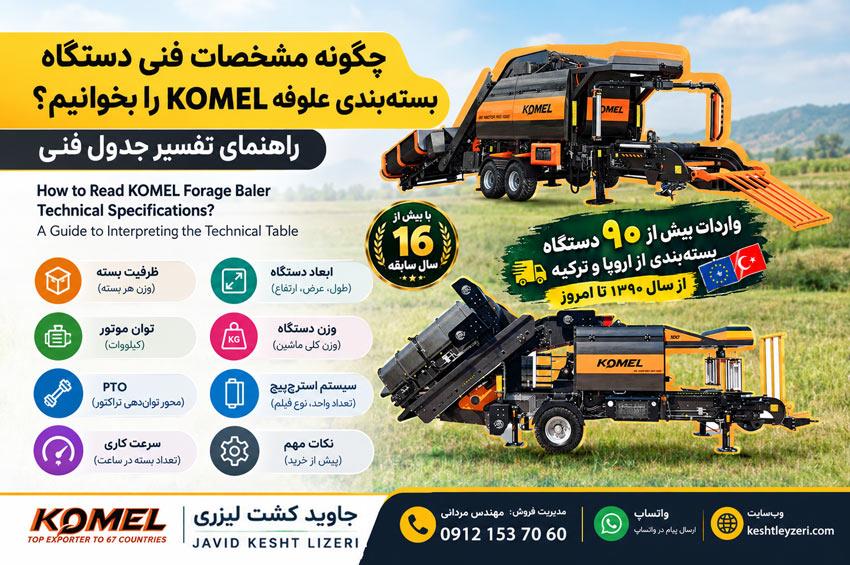
How to Read KOMEL Forage Packaging Machine Specifications: A Technical Table Guide
A Technical Guide to Selecting and Comparing Forage Packaging Machines
How to Read KOMEL Forage Packaging Machine Specifications: A Technical Table Guide
KOMEL Forage Packaging Machine Specifications Guide
Learn how to read KOMEL forage packaging machine specifications, including bale weight, motor power, PTO, operating output, dimensions and wrapping systems.
Reviewing technical specifications is an essential step when selecting a forage packaging machine. But what do terms such as bale weight, motor power, drive system, hourly output and machine dimensions actually mean? Does the number in a model name represent the exact weight of each bale? This guide explains how to interpret KOMEL forage packaging machine specifications, compare models and confirm important details before purchasing.
Why Are Technical Specifications Important?
A forage packaging or silage machine should match the material, production requirements, operating environment and available resources. Machines that appear similar may differ in power requirements, drive systems, dimensions, bale capacity and operating conditions.
Buyers should therefore look beyond the model name or a single number in a brochure. Each specification should be understood in context, including its unit of measurement and whether it has been confirmed for the exact model and configuration.
1. What Does the Model Name Tell You?
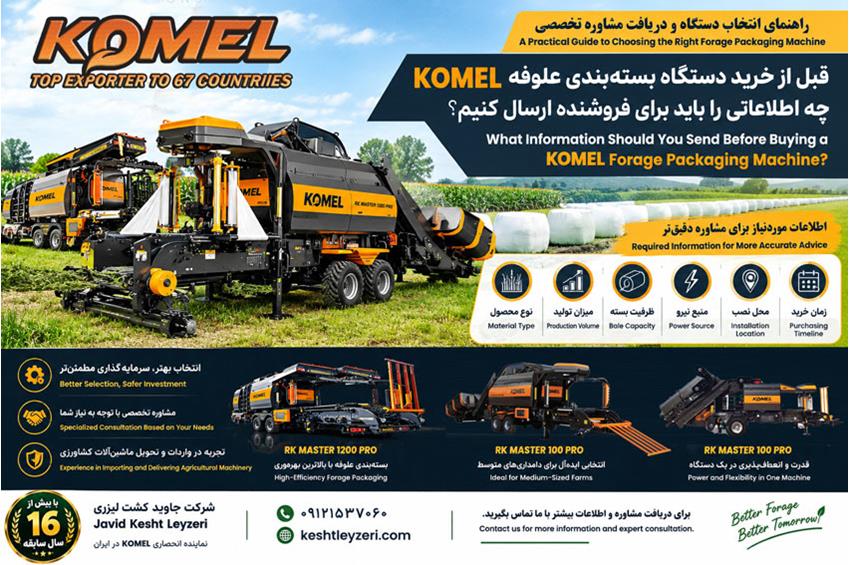
KOMEL's product range includes model names such as RK MASTER PRO 100, RK MASTER PRO 200, RK MASTER PRO 500, RK MASTER PRO 700, RK MASTER PRO 1200 and RK MASTER MOBILE 1200.
A model name helps identify the machine, but the number should not automatically be interpreted as the exact bale weight, hourly output or motor power. Check the technical specifications for the specific model.
Before requesting a quotation, confirm the full model name and version. Make sure the supplied specifications refer to the same machine and configuration you intend to purchase.
2. What Is Bale Weight?
Bale weight refers to the weight or weight range of the bales that a machine is designed or specified to produce. It is different from the quantity of material processed per hour.
Ask the supplier:
- What is the specified minimum and maximum bale weight?
- For which material and conditions is the figure valid?
- Can moisture, density or material preparation affect bale weight?
- Is the figure a manufacturer's specification or an approximate operating result?
Actual bale weight may vary with the material, moisture content, compression and operating conditions. State your target weight and confirm that the selected model can meet your requirements.
3. Machine Output and Bales per Hour
Operating output describes how much work a machine performs over a period of time. Some specifications list bales per hour, but this is not the same as tonnes processed per hour.
To estimate theoretical throughput, the average bale weight must also be known. Even then, the calculation is only an estimate and may not represent actual production at your site.
Ask the supplier what material, bale weight and operating conditions were used to determine the stated output.
4. Motor Power: What Does kW Mean?
Motor power is commonly expressed in kilowatts (kW). It is an important specification for understanding the machine's power requirements, but it does not fully define the required power supply.
- Which motor or machine unit does the stated power refer to?
- What electrical supply is required?
- Is a generator needed, and what specifications must it meet?
- Can the machine operate using a tractor PTO?
Electric motor power and tractor power requirements are different specifications and should not be treated as directly interchangeable.
5. Drive System: Electricity, Generator or Tractor PTO
The drive system is an important consideration. Depending on the model and configuration, a machine may use an electric motor, a tractor power take-off (PTO) or another specified arrangement.
For PTO-driven models, check tractor compatibility against the manufacturer's requirements. Tractor horsepower alone may not be sufficient; connection details, rotational speed and other requirements may also need to be verified.
If the machine will operate where grid electricity is unavailable, tell the supplier at the beginning so that suitable power options can be assessed.
6. Machine Dimensions, Weight and Installation Space
Technical tables may list length, width, height and machine weight. These specifications are important for transportation, unloading, installation and planning the working area.
- What are the transport and operating dimensions?
- Is there enough space for operation and movement around the machine?
- Are the machine weight and unloading equipment compatible?
- Do site entrances have height or width restrictions?
- Is sufficient maintenance access available?
Check dimensions and weight for the exact model and configuration. Specifications from one model should not be assumed to apply to another.
7. Compression, Netting and Stretch-Wrapping Systems
Besides motor power and capacity, the compression and wrapping systems are important. Depending on the design, the process may include feeding the material, compressing and preparing the bale, and covering it with stretch film.
Check which features are confirmed for the selected model:
- Compression method;
- Netting or bale-retaining components, where applicable;
- Number of stretch-wrapping units;
- Compatible film width and specifications;
- Automation level and control system;
- Maintenance requirements and consumable parts.
A feature listed for one model should not automatically be assumed to be available on every machine in the same product family.
8. Rated Specifications Versus Actual Performance
Technical figures are useful for describing and comparing machines, but actual operating conditions may differ from the conditions under which a specification was determined.
Material type, moisture, preparation, operator experience, downtime and the working environment can all affect performance. Discuss your actual operating conditions with the supplier when estimating output.
9. Technical Specification Interpretation Table
| Specification | Meaning | Question to Ask |
|---|---|---|
| Model name | Machine model and version identifier | Do the specifications match this exact version? |
| Bale weight | Specified bale weight or range | For which material and conditions is it valid? |
| Bales per hour | Number of bales produced over a stated period | How was the output figure determined? |
| Motor power (kW) | Rated power stated for a motor | What power supply is required? |
| PTO | Power transmitted through a tractor power take-off | What tractor specifications are required? |
| Machine dimensions | Length, width and height | Are transport and operating dimensions different? |
| Machine weight | Weight relevant to transport and installation | Which configuration does this figure describe? |
| Stretch-wrapping system | Equipment used to wrap bales with film | Which wrapping equipment and film are compatible? |
| Automation | Level of automatic process control | Which operations are performed automatically? |
10. What Documents Should You Request Before Buying?
Ask the supplier for technical information relating to the exact model. Depending on the machine and purchase terms, this may include the specification sheet, operator manual, power requirements, transport dimensions, included equipment, warranty and service conditions.
If information on a website or brochure is incomplete, request written clarification. Bale weight, operating output, power requirements and included equipment should all be verified for the specific machine.
Checklist for Comparing Two Forage Packaging Machines
- The full model names and versions are identified.
- Bale weight and dimensions match the intended application.
- Operating output suits the material and production schedule.
- Power supply and tractor requirements have been checked.
- Transport dimensions, machine weight and installation space are known.
- Compression and wrapping equipment have been reviewed.
- Consumables, maintenance and technical support are clarified.
- Important specifications are supported by reliable documentation or written confirmation.
Consult Javid Kesht Leyzeri About KOMEL Machines
Selecting the right model requires reviewing technical specifications alongside the material, production requirements and operating environment. If you need help interpreting specifications or comparing models, prepare your operating requirements and request advice before purchasing.
Javid Kesht Leyzeri supplies agricultural machinery and forage packaging equipment. Contact the team for information about KOMEL models, technical specifications and purchasing conditions.
Sales Manager: Mr. Mardani
Phone: +98 912 153 7060
WhatsApp: Message via WhatsApp
Website: keshtleyzeri.com
Recent News