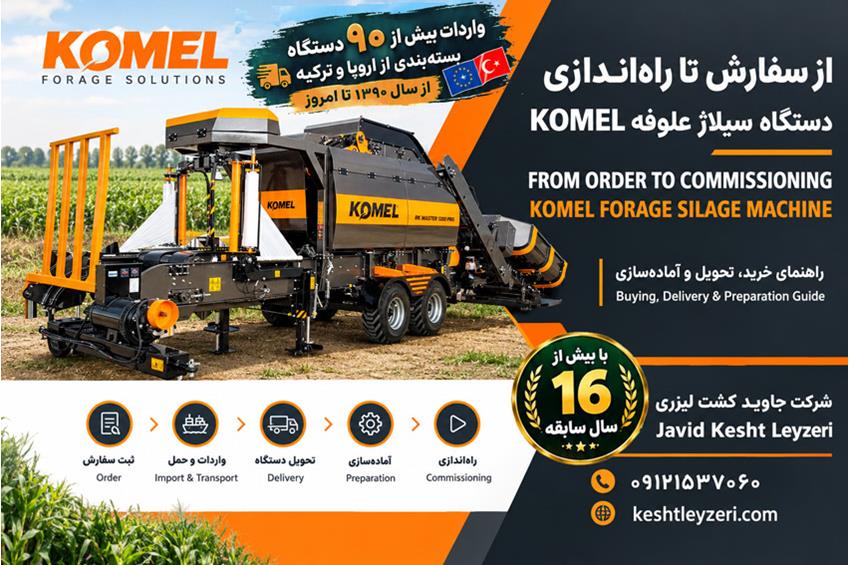
From Order to Commissioning: Buying and Delivering a KOMEL Forage Silage Machine
A Practical Guide to Ordering, Importing and Delivering Forage Packaging Machinery
A Practical Guide to Ordering, Importing and Delivering Forage Packaging Machinery
From Order to Commissioning: Buying and Delivering a KOMEL Forage Silage Machine
Purchasing a forage silage machine involves more than selecting a model and paying for the equipment. Assessing operational needs, choosing the right capacity, confirming the order, arranging supply and transportation, receiving the machine and preparing it for operation are all important steps. This guide explains the main stages of purchasing a KOMEL forage packaging machine.
1. Assess Your Requirements Before Ordering
The first step is to identify the intended application and the actual operating requirements. A machine suitable for one livestock farm or feed-production facility may not be the best option for another operation.
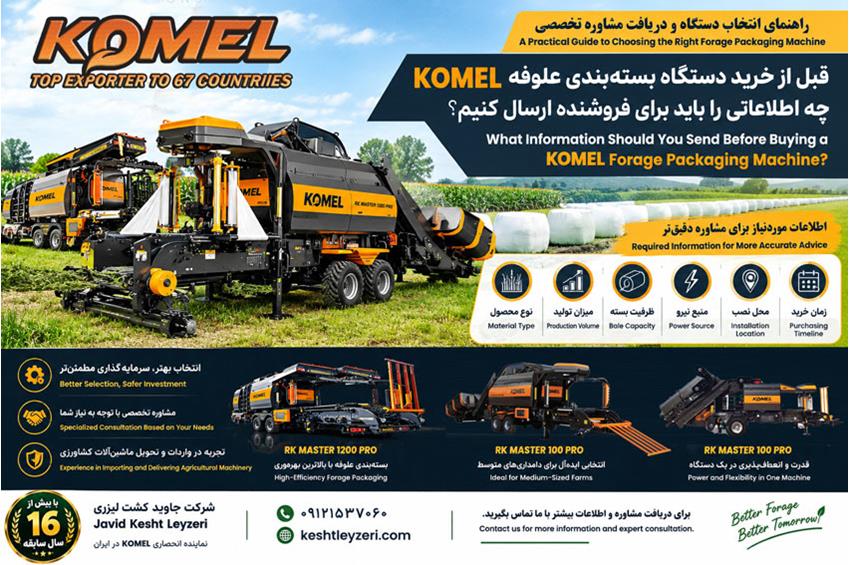
Before selecting a model, consider:
- The material to be packaged, such as corn silage or other suitable products;
- The expected daily or seasonal production volume;
- The required bale capacity and dimensions;
- The available installation area and working space;
- Access to electricity or tractor PTO, where supported by the model;
- Transportation, access and maintenance requirements.
Defining these requirements helps ensure that the machine is selected for the actual working conditions rather than by model name alone.
2. Select the Right KOMEL Forage Packaging Machine
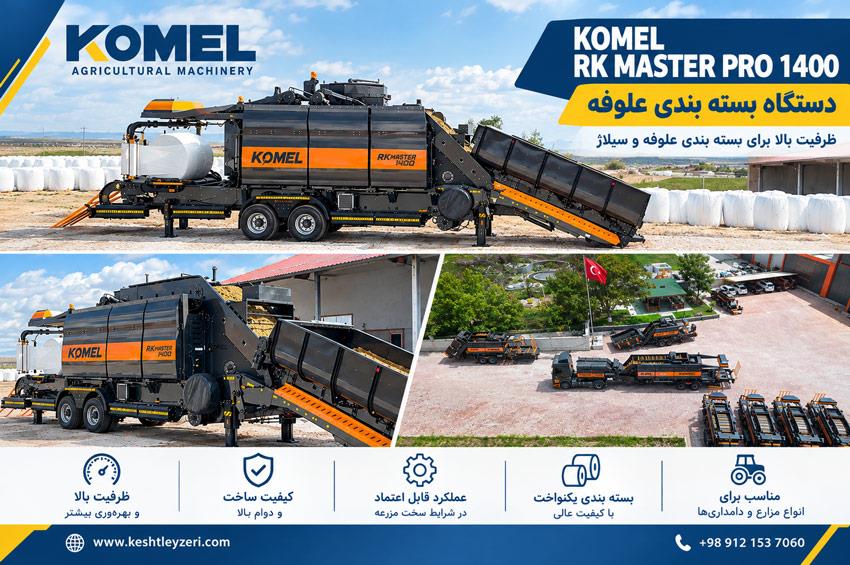
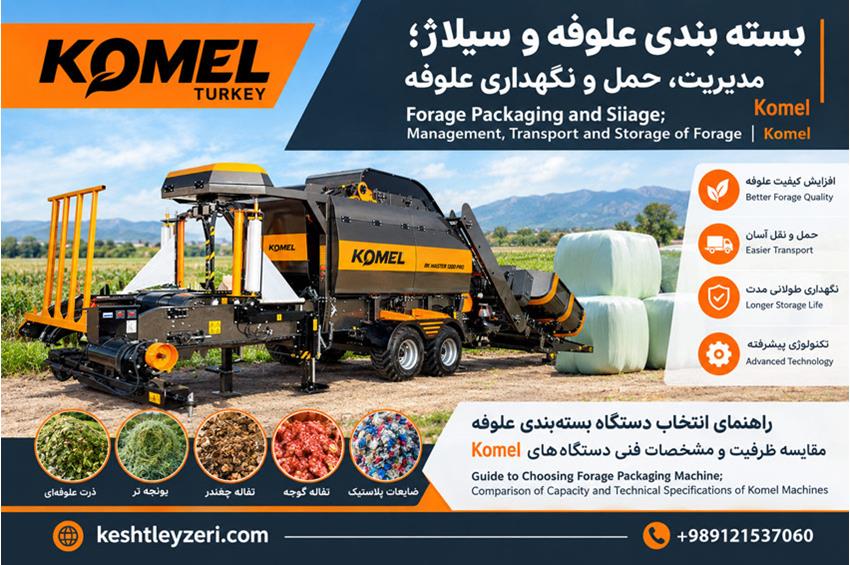
After assessing the application, compare suitable models and their verified specifications. KOMEL TARIM's official website lists models including RK MASTER MOBILE 1200, RK MASTER PRO 1200, RK MASTER PRO 700, RK MASTER PRO 500, RK MASTER PRO 200 and RK MASTER PRO 100.
The selection should take account of the intended material, required capacity, power source, machine dimensions, working space and transportation needs. Confirm the final specifications for the exact model before ordering.
For an overview of the manufacturer and its product range, Call with +989121537060.
3. Request a Quotation and Confirm the Purchase Terms
Once a suitable model has been identified, request a quotation and clarify the purchase terms. The final price can depend on the model, included equipment, sourcing conditions, transportation, import requirements and delivery arrangements.
- Exact model and confirmed technical specifications;
- Included equipment and accessories;
- Price and payment terms;
- Estimated supply and delivery schedule;
- Transportation costs and responsibilities;
- Warranty, technical support and spare-parts arrangements, where applicable;
- Responsibilities for preparation and commissioning.
Confirming these details in advance helps buyers plan their budgets and operational schedules.
4. Place the Order and Confirm the Details
Once the model and purchase terms have been agreed, record the order details clearly. The model, verified specifications, included equipment, payment terms, agreed schedule and delivery location should be documented.
If the machine is intended for a specific site, check access routes, unloading space and installation requirements before shipment.
5. Arrange Supply, Import and Transportation
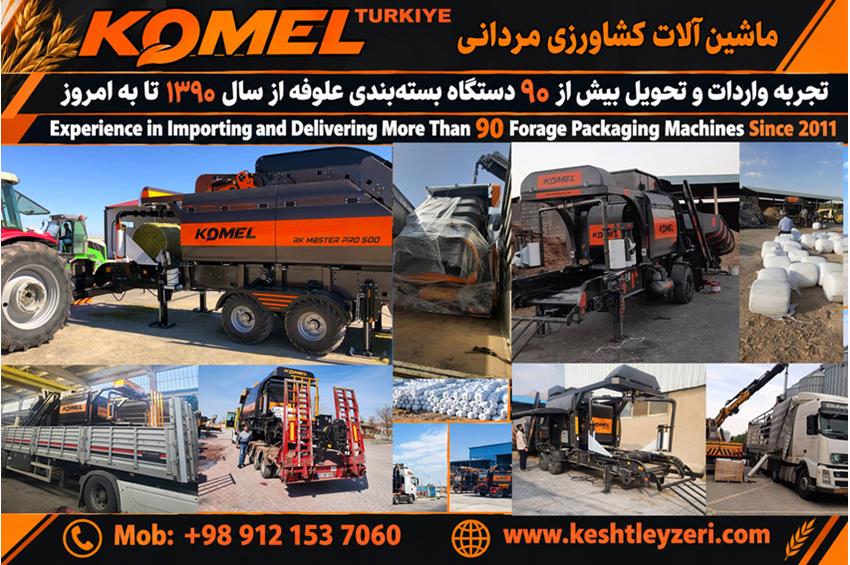
After the order is confirmed, the supply and transportation process can proceed. For imported machinery, delivery timing may depend on availability, production schedules, import procedures, shipping and other operational factors.
Delivery estimates should reflect the actual order conditions. Before the machine arrives, prepare the unloading area and arrange suitable handling equipment where necessary.
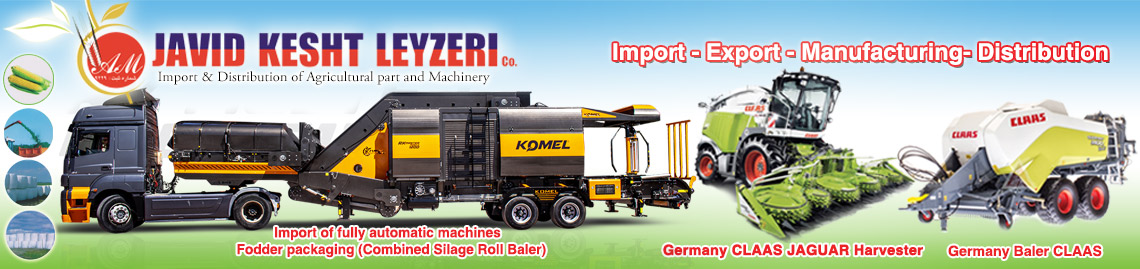
Javid Kesht Leyzeri provides guidance on selecting and sourcing forage packaging machinery. The details of each order are assessed according to the selected model and purchase terms.
6. Receive the Machine and Check Its Condition
When the machine is delivered, compare it with the confirmed order. Checking the model, included accessories, visible condition and delivery documents helps establish an accurate record of the equipment received.
- Verify the model and identification details;
- Check that the agreed accessories are included;
- Inspect the visible condition and document any damage;
- Collect the supplied documents and operating instructions;
- Confirm the next steps for preparation and commissioning.
If specialist equipment is required for unloading, handling or installation, arrange it in advance according to the specific model and manufacturer's instructions.
7. Prepare the Site and Check Commissioning Requirements
Delivery does not necessarily mean that a machine is ready for operation. Before commissioning, check the installation area, working clearance, access, safety requirements and power supply.
Exact requirements vary by model. For electrically powered machines, verify the electrical supply against the relevant technical documentation. For models using a tractor power take-off (PTO), check tractor compatibility and connection requirements according to the manufacturer's instructions.
Safety guards, connections and protective equipment should not be altered without appropriate technical review. Prepare and commission the machine in accordance with the manufacturer's instructions and applicable safety requirements.
8. Check Performance and Prepare for Operation
Initial checks and performance testing should follow the manufacturer's instructions and the terms agreed for the purchase. If technical commissioning or operator training is included in the agreement, confirm the schedule and responsible party in advance.
Before production begins, operators should understand safe operating procedures, machine controls, emergency stopping, routine maintenance and the steps to take if a fault occurs. Actual output depends on the model, material and operating conditions.
On-site installation, training and technician-led commissioning should be confirmed as part of the specific purchase arrangement; they should not be assumed to be automatically included with delivery.
9. Spare Parts, Maintenance and After-Sales Support
Proper maintenance can help reduce unexpected downtime. The maintenance schedule should follow the manufacturer's instructions and reflect the machine model and operating conditions.
Before purchasing, ask about replacement parts, technical service, warranty conditions and each party's responsibilities. These details are especially important for operations with intensive seasonal workloads.
KOMEL Forage Silage Machine Purchase Checklist
- The intended material and required capacity are defined.
- The model and verified specifications have been reviewed.
- The price, accessories and payment terms are clear.
- The delivery schedule and location are confirmed.
- The unloading and installation area is prepared.
- Electrical or tractor PTO requirements have been checked.
- Documents, instructions and included equipment are received.
- Commissioning, training and after-sales terms are clarified.
Buying a Forage Silage Machine from Javid Kesht Leyzeri
A successful purchase starts with understanding the customer's needs, selecting the right model and confirming the supply and delivery details. Javid Kesht Leyzeri provides information and consultation on agricultural machinery and forage packaging equipment.
Contact the team for information about KOMEL models, capacity requirements, ordering conditions, pricing and estimated delivery.
Sales Manager: Mr. Mardani
Phone: +98 912 153 7060
WhatsApp: Contact via WhatsApp
Website: keshtleyzeri.com
Recent News