KOMEL Forage Baler Applications Beyond Corn Silage
Applications Beyond Corn Silage in KOMEL Forage Packaging Machines
Applications Beyond Corn Silage in KOMEL Forage Packaging Machines
Why Is a KOMEL Forage Packaging Machine Not Only for Corn Silage? Exploring Its Lesser-Known Applications
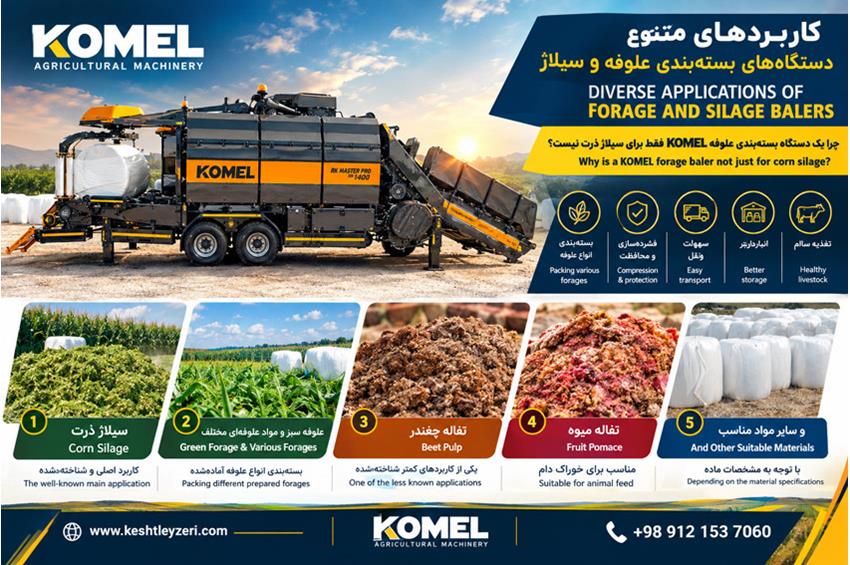
When people hear the term forage packaging machine, corn silage is often the first application that comes to mind. However, KOMEL forage packaging machines are not limited to corn silage. Depending on the model, material characteristics and operating conditions, these machines can also be used for different types of green forage, sugar beet pulp, fruit pulp and other suitable livestock feed materials.
A KOMEL Forage Packaging Machine Is Not Limited to Corn Silage
Corn silage is one of the most recognized materials processed by forage and silage packaging machines, but it is not the only application of KOMEL equipment. Depending on the model and the characteristics of the material, the machine can be used for materials that can be properly compressed, formed and packaged.
Therefore, choosing a machine based only on the phrase "corn silage packaging machine" is not always the right approach. The type of material, required package weight, production volume, moisture level and expected operating capacity should all be considered before purchasing a machine.
1. Corn Silage Packaging: The Best-Known KOMEL Application
Corn silage is one of the main materials processed by forage packaging machines. After harvesting and preparation, the forage can be fed into the packaging system for compression and packaging.
This helps explain why KOMEL machines are often recognized as corn silage packaging machines. However, corn silage represents only one part of their potential application range.
2. Green Forage and Other Forage Materials
Another important application is the packaging of green forage and other prepared forage materials. Depending on the machine model and material characteristics, prepared forage can be compressed and packaged for easier handling, transportation and storage.
This can be particularly useful for livestock operations that work with more than one type of forage instead of relying on a single feed material throughout the year.
3. Sugar Beet Pulp: A Lesser-Known Application
Sugar beet pulp is another material that can be considered for packaging with suitable KOMEL forage packaging systems. Because beet pulp can have different moisture and physical characteristics compared with conventional forage, proper model selection and compression conditions are important.
Packaging beet pulp can help livestock operations and feed-processing facilities manage prepared material in a more compact and organized form.
If the buyer plans to package beet pulp as well as corn silage, this requirement should be communicated before purchasing the machine so that the appropriate model can be evaluated.
4. Fruit Pulp Packaging
Fruit pulp is another lesser-known application of forage packaging machinery. Fruit-processing by-products can differ considerably from conventional forage in terms of moisture, structure and consistency.
For this reason, using a machine for fruit pulp should be evaluated according to the specific machine model and the actual characteristics of the material.
5. Why Can KOMEL Machines Handle More Than One Material?
The answer lies in the packaging process itself. The prepared material is fed into the machine, compressed into a compact form and then packaged to create a manageable unit.
Therefore, the material does not necessarily have to be corn silage. What matters is whether its physical characteristics are compatible with the selected machine.
- Material particle size
- Moisture level
- Density and compressibility
- Required package weight
- Required production capacity
- Feeding system requirements
- Electrical power or PTO requirements for the selected model
6. Is Every KOMEL Model Suitable for Every Material?
No. This is one of the most important points to understand before purchasing a forage packaging machine.
The KOMEL product range includes machines with different capacities and configurations. They should not be considered identical simply because they belong to the same product family.
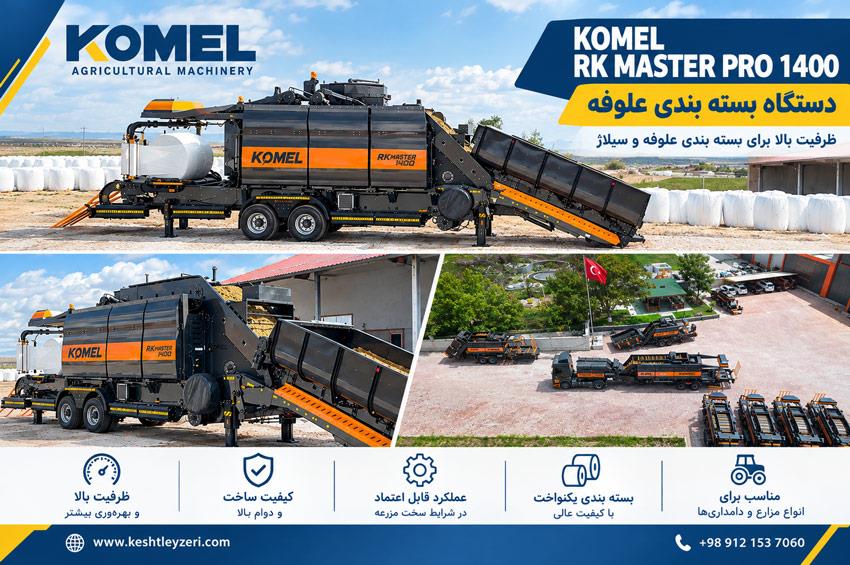
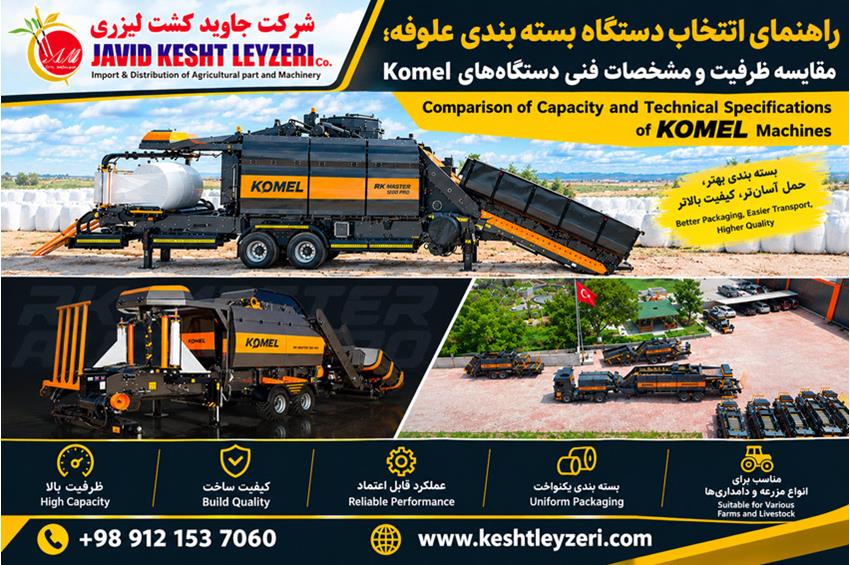
Models such as the RK MASTER 100 PRO, RK MASTER 500 PRO, RK MASTER 700 PRO and RK MASTER 1200 PRO are designed for different capacity requirements. Higher-capacity models such as the RK MASTER PRO 1400 are intended for operations requiring substantially greater packaging capacity.
If a buyer intends to package several different materials, all of those materials should be specified before purchasing the machine so that the appropriate model can be evaluated.
7. The Difference Between a Livestock Farm and a Forage Processing Center
A medium-sized livestock farm does not necessarily have the same requirements as a large forage processing or distribution operation.
A livestock farm may mainly package its own corn silage, while a forage-processing center may handle several materials and much larger production volumes.
In such situations, machine capacity, package weight, operating speed and material type become increasingly important. Choosing the largest machine available is therefore not always the best solution.
8. KOMEL Models and the Importance of Choosing the Right Capacity
The KOMEL range includes different models such as the RK MASTER 100 PRO, RK MASTER 500 PRO, RK MASTER 700 PRO and RK MASTER 1200 PRO. Higher-capacity machines such as the RK MASTER PRO 1400 are also considered for operations requiring greater packaging volumes.
Machine capacity should be selected according to the amount of material that needs to be packaged during the working day or hour. A machine that is too large may increase the initial investment unnecessarily, while a machine that is too small may increase operating time and reduce productivity.
9. Applications Beyond Traditional Livestock Farms
Forage packaging machines are not limited to conventional livestock farms. Feed-processing facilities, forage preparation centers and agricultural operations working with suitable agricultural by-products can also benefit from these machines.
However, unusual materials should always be evaluated according to their actual characteristics before purchase. Similar appearance alone is not enough to guarantee that a material is suitable for a particular machine.
10. Why Does Material Moisture Matter?
Moisture is one of the important factors affecting forage packaging performance. Two materials with the same weight can behave differently during compression because of differences in moisture content.
For materials such as silage, beet pulp and fruit pulp, evaluating the actual product before selecting a machine is particularly important. The goal is not simply to create a heavy package; the package must also be properly formed and compatible with the characteristics of the material.
11. Why Is a Specialized Seller Important?
When a machine is expected to process more than one material, professional pre-purchase consultation becomes even more important. The buyer should explain which materials will be packaged, the expected production volume and the desired package weight.
Javid Kesht Leyzeri, the exclusive representative of KOMEL Turkey in Iran, supplies forage packaging machines, silage equipment and related agricultural machinery and provides guidance for selecting a suitable machine according to the buyer's material and production requirements.
12. Is a KOMEL Forage Packaging Machine Right for You?
If your operation is not limited to corn silage and you also work with green forage, sugar beet pulp, fruit pulp or other suitable livestock feed materials, you should evaluate the compatibility of the selected model with all intended materials before purchasing.
The key questions to answer before purchasing are:
- What material or materials will be packaged?
- What is the moisture level and preparation condition of the material?
- What package weight is required?
- How much material must be packaged per hour?
- Is three-phase electricity available at the operating site?
- Can a tractor PTO be used under the required operating conditions?
- Will the machine be used for one material or several different materials?
Conclusion: Do Not Think of KOMEL Only as a Corn Silage Machine
KOMEL forage packaging machines should not be viewed only as corn silage packaging equipment. Depending on the model and material conditions, these machines can also be used for a range of forage and livestock feed materials, including green forage, sugar beet pulp and fruit pulp.
The important point is that compatibility with each material should be evaluated according to the machine model, moisture level, particle size, package weight and operating conditions.
Therefore, selecting the correct model is more important than simply choosing the machine with the highest capacity.
If you are looking to buy a KOMEL forage packaging machine and intend to use it for several different materials, define your materials and production volume before purchasing so that the appropriate model can be selected according to your actual requirements.
Buy KOMEL Forage Packaging Machines in Iran
Javid Kesht Leyzeri is the exclusive representative of KOMEL Turkey in Iran, supplying forage packaging machines, silage machinery and related agricultural equipment.
For information about available models, machine capacities, sales conditions and selecting the right machine according to material type and production volume, contact the sales department.
Website: keshtleyzeri.com
Contact: 989121537060
Frequently Asked Questions About KOMEL Forage Packaging Machines
Is a KOMEL machine only for corn silage?
No. Depending on the model and material conditions, KOMEL machines can also be used for green forage, sugar beet pulp, fruit pulp and other suitable livestock feed materials.
Can one KOMEL machine package several different materials?
In many applications, a machine can be used for more than one material. However, compatibility should be evaluated according to the selected model and the actual characteristics of each material.
Does material moisture affect machine selection?
Yes. Moisture, particle size, density and physical characteristics can affect compression and packaging performance.
Is the KOMEL RK MASTER PRO 1400 only for corn silage?
No. The purpose of this product family is not limited to one material. Nevertheless, the exact compatibility of a material should be evaluated according to the machine model and actual operating conditions before purchase.
What information is needed to select the right KOMEL machine?
Material type, moisture level, production volume, required package weight, available electrical power or PTO conditions and expected working hours are among the most important factors for selecting the appropriate model.
Recent News