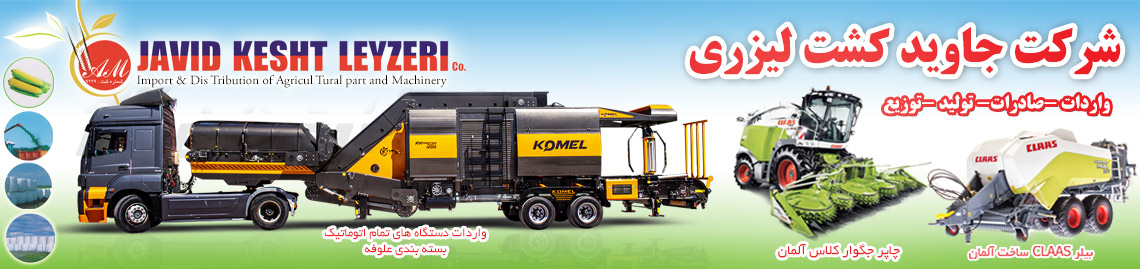
The Komel corn silage packaging machine is the most advanced equipment for compressing and storing silage and corn fodder. By reducing the volume and waste of fodder, this machine significantly increases the efficiency of dairy farms.
The Komel forage and silage packaging machine is one of the most essential agricultural tools for compressing and preserving both wet and dry forage. By reducing the volume of forage, it simplifies transportation and storage while increasing efficiency and saving costs.
Javid Kesht Leyzeri Company, the exclusive representative of Komel Turkey, has launched a special promotion for Komel forage packaging machines. These fully automatic, advanced machines can package various types of forage, corn silage, wet alfalfa, pulp materials, and even shredded plastic and carpet waste, offered in capacities ranging from 50 to 1500 kg.
forage silage machine price, forage packaging machine price, forage silage machine sale, forage packaging machine sale, forage silage machine purchase, forage packaging machine purchase, forage packaging machine, forage silage machine, corn silage machine, malt silage machine, corn silage packaging machine, corn silage machine price, silage machine sale, sugar beet pulp silage machine, sugar beet pulp packaging machine.
One of the fundamental challenges in livestock production is the problem of feed shortages and high costs of animal nutrition. Therefore, the necessity of using economical feed materials such as agricultural by-products (straw, husk, sugarcane tops, etc.) and by-products of agro-industries (molasses, sugar beet pulp, bagasse, and sugarcane tops and pits) in animal nutrition is felt. About 60% of the feed shortage exists in the country. An optimal solution to cover this shortage is to optimize the use of agricultural residues in general and, in particular, the use of sugar beet tops in Khuzestan province. A significant portion of sugar beet includes leaves and tops (at least 25% of the total plant weight) that remain in the field during sugar beet stem harvesting. The highest concentration of protein in sugar beet plants, which is concentrated in the green leaves, part of the tops, can be a significant nutritional source for livestock. The sugar content in sugar beet plays an essential role in providing usable energy for animals, making it an effective food source in animal nutrition. Sugar beet tops can be stored either as dry or as silage and used in the nutrition of dairy and beef cattle. Silaging sugar beet tops, along with adding nutritional supplements (such as molasses and urea), improves the quality and nutritional properties of the silage product.
Silage of camelthorn plant is a forage preparation process used for better preservation and storage of the camelthorn plant. In this process, the camelthorn plant is chopped, and by adding preservatives, it is packed in an airtight environment and undergoes fermentation under anaerobic conditions (without the presence of air). This storage method can be beneficial for preserving and utilizing the nutritional properties of the plant throughout unfavorable seasons. For example, during the winter when access to fresh forage may be limited.
Alhagi maurorum is an edible and medicinal plant found in hot and dry regions of Asia and North Africa. This plant is often known by other names such as "Khuzestan sesame" or "Middle East sesame". The distinguishing features of this plant are: having thorny branches and small red or pink flowers. This plant is usually found in areas with dry conditions, insufficient irrigation and non-draining soils. Thistle plant is used in the traditional medicine of some countries, especially in some regions of Asia, to treat some health problems. It has been claimed that parts of this plant, including the roots and leaves, may have anti-inflammatory and antibacterial properties. Also, some people use it as a food source.
Silage of the remains of bean farming has many positive effects on animal nutrition. First, bean crop residues are rich in protein, which is important for the growth and development of livestock muscles. They also contain degradable fiber to improve animal digestion and maintain digestive tract health.
Silage of sugar beet pomace is a method of preserving sugar beet fodder, which is done using the silage process. In this method, sugar beet pulp, which is obtained from the waste after the sugar production process, is prepared naturally or under the controlled conditions of local Farmanrose green (amber stain) bacteria, which convert all sugar into alcohol in the presence of air, or Formed by multi-level formaldehyde method in the presence of polymer (sugar and terephthalic monomer). Compared to traditional methods of forage preservation, this method preserves all the characteristics of fresh forage (such as nutritional value, exotensies, polymer resistance, delay in decay and countable radionuclides, physical and chemical behaviors).
The effect of corn blight on grain yield depends on several factors, including weather conditions, nutrient sources, and proper plant maintenance. However, it is estimated that the maize pajosh has the greatest effect on the growth and fitness of the seeds. Some of the benefits of corn starch include increased number of kernels, increased kernel volume, and increased kernel oil content. In addition, corn stalks can help reduce the negative effects of weather conditions, including drought and high temperatures. Also, the genetic mutation that leads to corn rust can increase corn's resistance to pests and diseases, thus having a positive effect on grain yield. In general, corn cob can help to improve grain yield and biomass efficiency of this plant.