Forage silage is one of the most effective methods for preserving and improving livestock feed quality. By using forage silage and packaging machines, feed losses are significantly reduced while nutritional value is preserved through controlled fermentation. This method is highly economical for industrial and semi-industrial livestock farms. In this article, we review forage silage, its benefits, proper packaging methods, and a complete guide to purchasing forage silage packaging machines.
The Komel corn silage packaging machine is the most advanced equipment for compressing and storing silage and corn fodder. By reducing the volume and waste of fodder, this machine significantly increases the efficiency of dairy farms.
The Komel forage and silage packaging machine is one of the most essential agricultural tools for compressing and preserving both wet and dry forage. By reducing the volume of forage, it simplifies transportation and storage while increasing efficiency and saving costs.
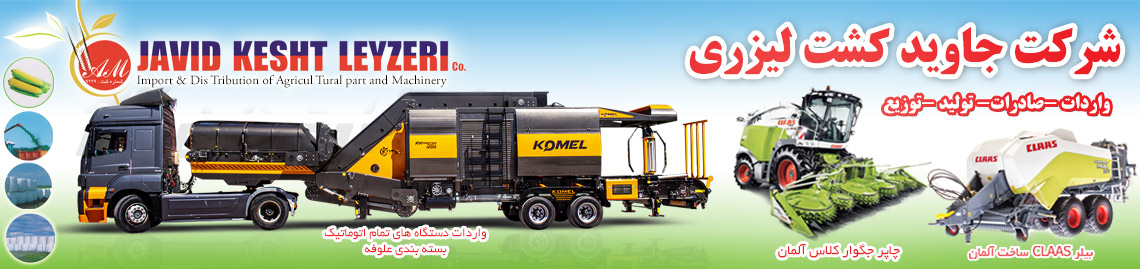
Javid Kesht Leyzeri Company, the exclusive representative of Komel Turkey, has launched a special promotion for Komel forage packaging machines. These fully automatic, advanced machines can package various types of forage, corn silage, wet alfalfa, pulp materials, and even shredded plastic and carpet waste, offered in capacities ranging from 50 to 1500 kg.
The effect of corn blight on grain yield depends on several factors, including weather conditions, nutrient sources, and proper plant maintenance. However, it is estimated that the maize pajosh has the greatest effect on the growth and fitness of the seeds. Some of the benefits of corn starch include increased number of kernels, increased kernel volume, and increased kernel oil content. In addition, corn stalks can help reduce the negative effects of weather conditions, including drought and high temperatures. Also, the genetic mutation that leads to corn rust can increase corn's resistance to pests and diseases, thus having a positive effect on grain yield. In general, corn cob can help to improve grain yield and biomass efficiency of this plant.
For the proper establishment of the corn plant, it should be noted that the seeds germinate and appear uniformly. It is clear that seed shape and size (seed grading) has nothing to do with germination, seed vigor or yield.
Silo packing fodder corn is one of the best ways to store corn for animal feed. This method makes corn not only available at any time and place, but also of higher quality. Packed silos are very uniform and uniform and prevent contamination and damage that may occur in traditional silos. Also, in terms of economy, the use of packed silos leads to a reduction in costs and an increase in livestock productivity. In short, silage packaging is an efficient solution with wide applications for the storage and use of fodder corn as animal feed.
Animal feed and silage production have always been very important for humanity. Many of the foods we consume are produced directly or indirectly from livestock, and if the supply of these foods is not done well, we may face serious problems. Especially in cold and snowy seasons, providing fresh food for livestock faces many challenges. Therefore, various methods have been used to store animal feed since a long time ago. One of the most important methods is storing this food in the form of silage, which allows farmers to store and use a large amount of plants for livestock feed.
Maize is a fodder and cereal plant that is cultivated in many regions of the world. This plant has long stems and broad leaves, and its fruits are known as "Kalvan" or "Bran". Corn is used as a rich source of energy and nutrients for humans and animals and plays an important role in the production of animal feed.
Almost all 400 thousand hectares of agricultural land under corn cultivation in Iran is irrigated. Therefore, improving irrigation management can have a significant impact on the quantity and quality of water, which is known as the most important resource of the country. Correct management of irrigation in corn fields can bring factors such as economic production, saving water resources and maintaining or increasing water quality. For this purpose, it is necessary to use estimation of evaporation and transpiration of corn and accurate measurement of water in the soil profile to determine the time and amount of irrigation.