Tractor battery service
JAVID KESHT LEYZERI COMPANY
Required equipment: battery, baking soda, wire brush, grease, distilled water, acid water
Activity Description: Wash the battery and check its acid water level. Visiting the external surface of the battery The external surface of the battery must be clean and dry to determine if there are cracks or breaks in it. Wet body of the battery causes the battery to discharge automatically.
1- Before washing the battery completely, check its poles for sulfate. Sulfation of the poles, while creating resistance to the passage of electricity, causes corrosion of the poles and the battery head.
2- Use a wire brush to remove sulfate deposits from the poles.
3- To clean the external surface of the battery, wash it with warm water or a diluted solution of baking soda (60 grams of baking soda in one liter of water).
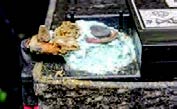
Sulfation of battery poles
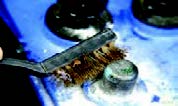
Cleaning the poles with a wire brush
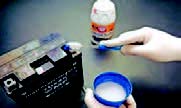
Washing the poles with baking soda and warm water
4- Dry the battery.
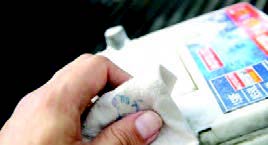
Wipe the poles with a soft, dry cloth
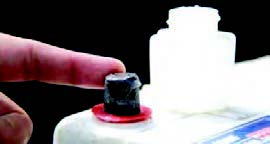
Applying grease to the poles
5- Apply grease on the poles to prevent sulfation.
Visit the battery acid water level
The level of acid water should be about 1 cm above the surface of the plates. In some batteries that have transparent plastic Max and Min boxes on the battery box, the acid water level should be between the two marks.
Some batteries cannot be serviced due to being sealed, these types of batteries are called atomic in the market.
Attention
If the level of acid water is low, just add distilled water to the battery to reach the desired level. But if the acid water is empty due to the battery being overturned, the acid water must be added to the battery by the battery maker.
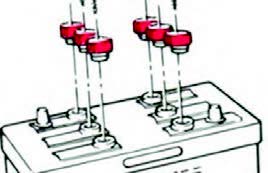
Opening the lid of the cells to check the water level of the battery
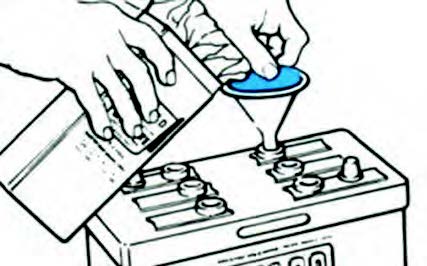
Add distilled water to the cells if needed
Recent News