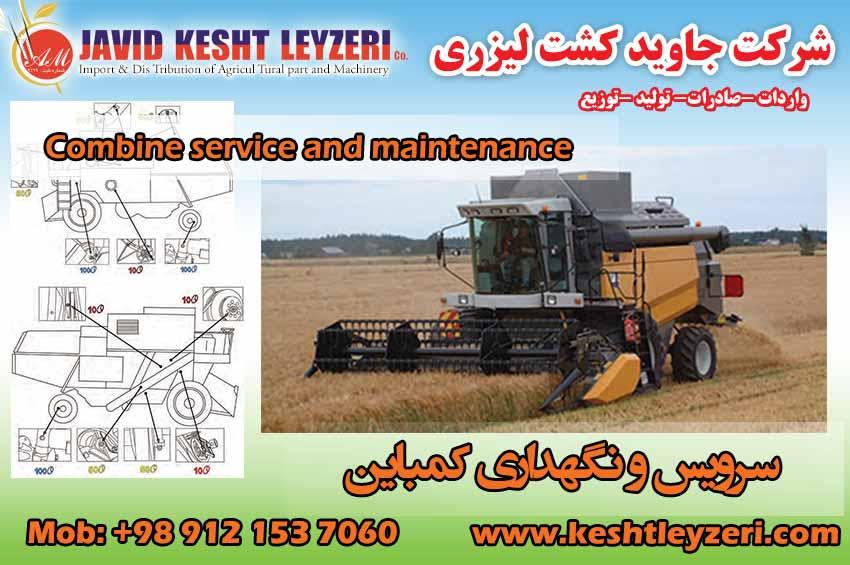
Combine service and maintenance
Javid Kesht Leyzeri Co.Ltd (Mardani Trading)
Combine services can be classified into two categories: services during operation and services during storage.
Combine services during operation
These services include:
Lubrication of moving parts: Combine greasers are shown in Figure 46 and must be lubricated after the specified period.
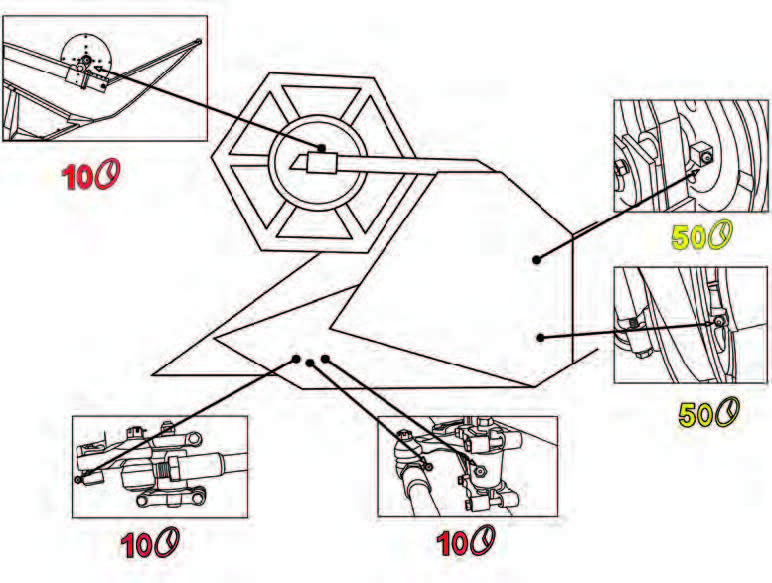
Cutting and feeding unit greasers
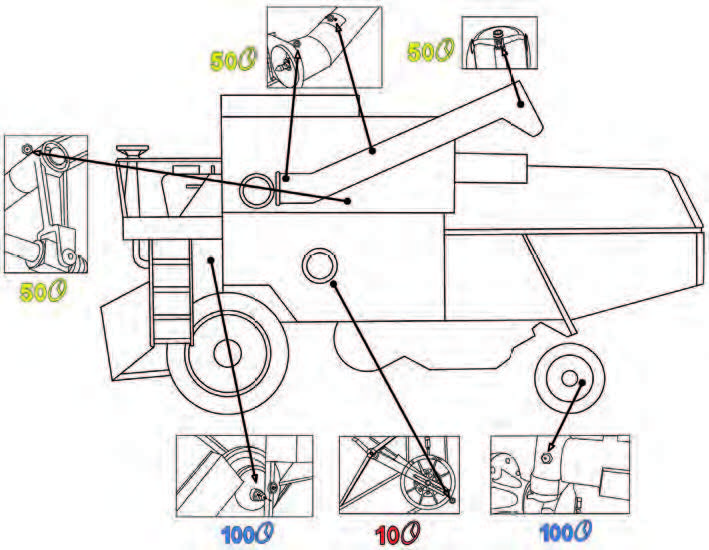
Grease nipples on the left side of the combine
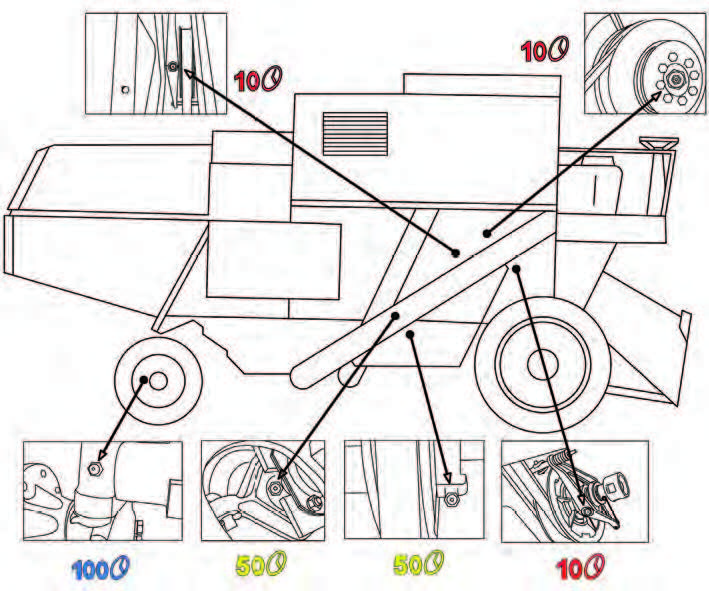
Grease nipples on the right side of the combine
Adjustment of belts and chains after 25 hours of work
Screwing the corners of the thresher after 25 hours of work
Wrench the wheels and steering shaft after 25 hours of work
Change engine oil and filter after every 20 working hours
Changing the hydraulic oil after 500 working hours
Changing the gearbox oil after 500 working hours
Final reduction oil change after 500 working hours
Adjusting the fuel system by an expert after a thousand hours of work
Storing and maintaining the combine in the non-harvest season:
The damage that a combine or any machine in general (if not paid enough attention to) suffers during the storage period, will be very expensive and will involve huge expenses for repair and replacement of parts. The biggest risks in this field are caused by the rusting of open parts and the proximity of moisture, as well as the weak acid that exists in low-quality oils and fuels. In addition to such factors, other general points should also be considered, some of which are mentioned below.
Instructions for maintaining the combine at the end of the working season (harvest):
If possible, try to park the combine in a sheltered and dry place.
Clean the combine carefully from the inside because straw and stubble absorb moisture from the air and cause the metal parts of the combine to rust.
Remove all the belts and clean them with a cloth soaked in alkali and keep them in a cool and dark place.
Clean and lubricate all power transmission chains with thick oil to prevent rusting. Clean the spirals and elevators and leave the upper and lower valves of the elevator open.
Clean the seed tank and auger carefully and clean all the sieves. Grease the combine according to the greasing method, listed in the book, and release the adjustment threads (OM), the lubrication guide and the springs.
Repaint all the discolored parts.
Place the harvester horizontally on a stool or wood in a dry place and separate the machine from the combine.
Lubricate the handle of the connecting rods well.
Cover the bottom of the combine with a stool or a stick so that pressure is not applied to the tire. Do not deflate the tires and if you have to store the combine in the open air, you must remove the wheels after closing the combine and store it in a dry, cool and dark place.
When the engine is not used for a long time, try to protect its metal parts from rusting.
Empty the water in the radiator and after washing, fill it again with a mixture of water and antifreeze.
Drain the engine oil when the engine has not yet cooled down and replace the oil filter.
Then fill with standard engine oil. Cover the open vents with nylon caps or greaseproof paper.
Clean the engine completely and spray it with an anti-rust substance and then cover the engine surface with an impermeable tarpaulin or nylon so that dust and rainwater do not penetrate the engine.
After opening the battery, keep it in a dry and cool place and pay attention that it does not freeze and check the battery every month and charge it if necessary so as not to damage its plates. Drain the hydraulic system tank and fill it again with fresh oil after cleaning the filter.
Write down all the defects and defects of the combine and before the start of the working season, inform the company or the company's agents of the necessary actions and orders to supply the parts on time.
Recent News