What is the necessity of using conservation tillage methods?
javid keshtleyzeri Co.ltd
Contents list:
What is the necessity of using conservation tillage methods?
What is tillage?
What are tillage systems?
What are the types of tillage systems?
What are the disadvantages of conventional tillage system?
What is the current state of tillage and fuel consumption? Challenges and solutions
In the following, the above contents will be reviewed.
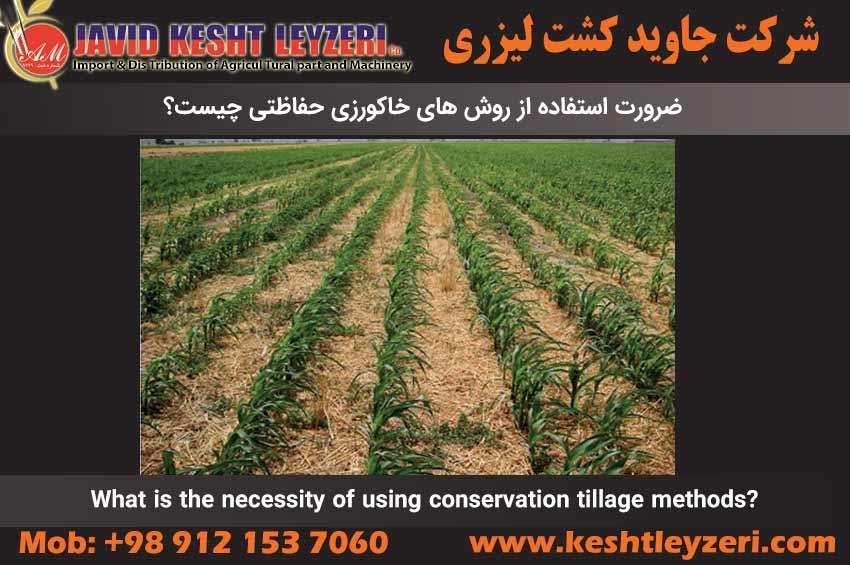
What is the necessity of using conservation tillage methods?
The rapid and ever-increasing population and the demand for nutrition reveal the necessity of planning to provide sufficient food. The discussion of sustainable agriculture has become more important during the last two decades and a lot of research has been done in this field. One of the fundamental and vital issues in the production cycle of agricultural products is how to perform tillage operations. The high vulnerability of the soil during the tillage operation and the steps after it, has led to the use of more effective methods to protect the soil and increase productivity in the long term. In this regard, the use of conservation tillage methods instead of the usual and traditional methods, in addition to protecting the soil against water and wind erosion, will have positive effects on the soil structure, the environment and the productivity of water resources.
Therefore, conservation tillage methods should be pursued seriously as part of a multi-year program, and farmers and people active in the agricultural sector, with the support of the government, should take the necessary measures to institutionalize these methods.
Tillage is one of the vital aspects of agriculture that has an important effect on the production of crops. This mechanical operation on the soil has its main purpose based on the following and optimizes the performance of plants and better management on the soil.
What is tillage?
Tillage is defined as performing any type of mechanical operation on the soil. In a broader sense, this action refers to mixing and changing the structural characteristics of the soil with different goals. In the field of agriculture, tillage refers to the changes that are made in order to prepare the soil for the cultivation and growth of plants.
Types of Tillage: Tillage operations include cutting, spreading, turning, and mixing the soil. These actions are performed using different tools in one or more steps.
What are tillage systems?
: Tillage systems include various steps to increase crop yield, including weed control, plant residue management, adding amendments and chemical fertilizers to the soil, improving soil thermal and moisture conditions, and reducing soil hardness. Changes in tillage implements have been revised to meet the needs of this system. The main orientation of these systems is towards conservation tillage, and new changes have been made in response to concerns related to reducing energy costs, preventing soil erosion, and optimizing operation costs.
What are the types of tillage systems?
Conventional tillage:
Includes primary and secondary tillage.
Operations include plowing and discing.
The soil is completely turned over and no plant remains remain on the surface.
The soil in this system is uncovered and prone to clumping.
What are the disadvantages of conventional tillage system?
Destruction of the soil structure and the hard layer deep in the soil.
The need for frequent disking and the use of a leveler to smooth the ground.
Decrease in soil fertility.
Environmental pollution and increased drought stress.
High costs of labor, fuel, and multiple tools.
Soil compaction due to the traffic of heavy vehicles.
Carbon loss.
Soil erosion caused by wind and water.
Depleting the earth of nutrients.
Loss of large parts of soil moisture.
What is the current state of tillage and fuel consumption? Challenges and solutions
Currently, in Iran and around the world, the preparation of the seed bed for agricultural operations is done through the use of tractors. The used tractors, as one of the main agricultural machines, are mostly of diesel type and need diesel fuel to provide energy for their movement.
Considering this situation as well as the large size of agricultural lands in Iran, it is clear that a significant amount of energy is consumed in the agricultural sector of this country. In this situation, any solution that leads to the reduction of fuel consumption will have a significant impact on the economic structure of the country.
To better examine these effects, a simple comparison is provided in the chart below:
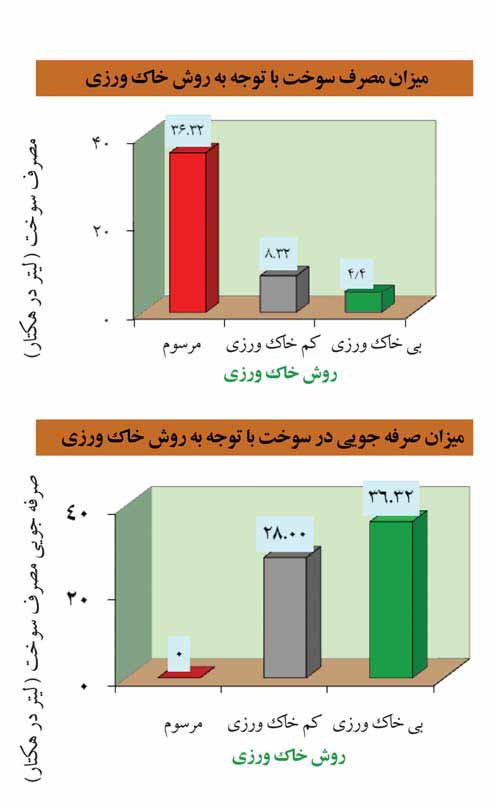
This analysis shows that any reduction in fuel consumption due to the improvement of efficiency in the field of tillage is important not only for economic efficiency but also for the purpose of preserving the environment. Therefore, adopting strategies to optimize tillage and better management of fuel consumption will strengthen the country's economy and at the same time help to preserve the environment.
Recent News